


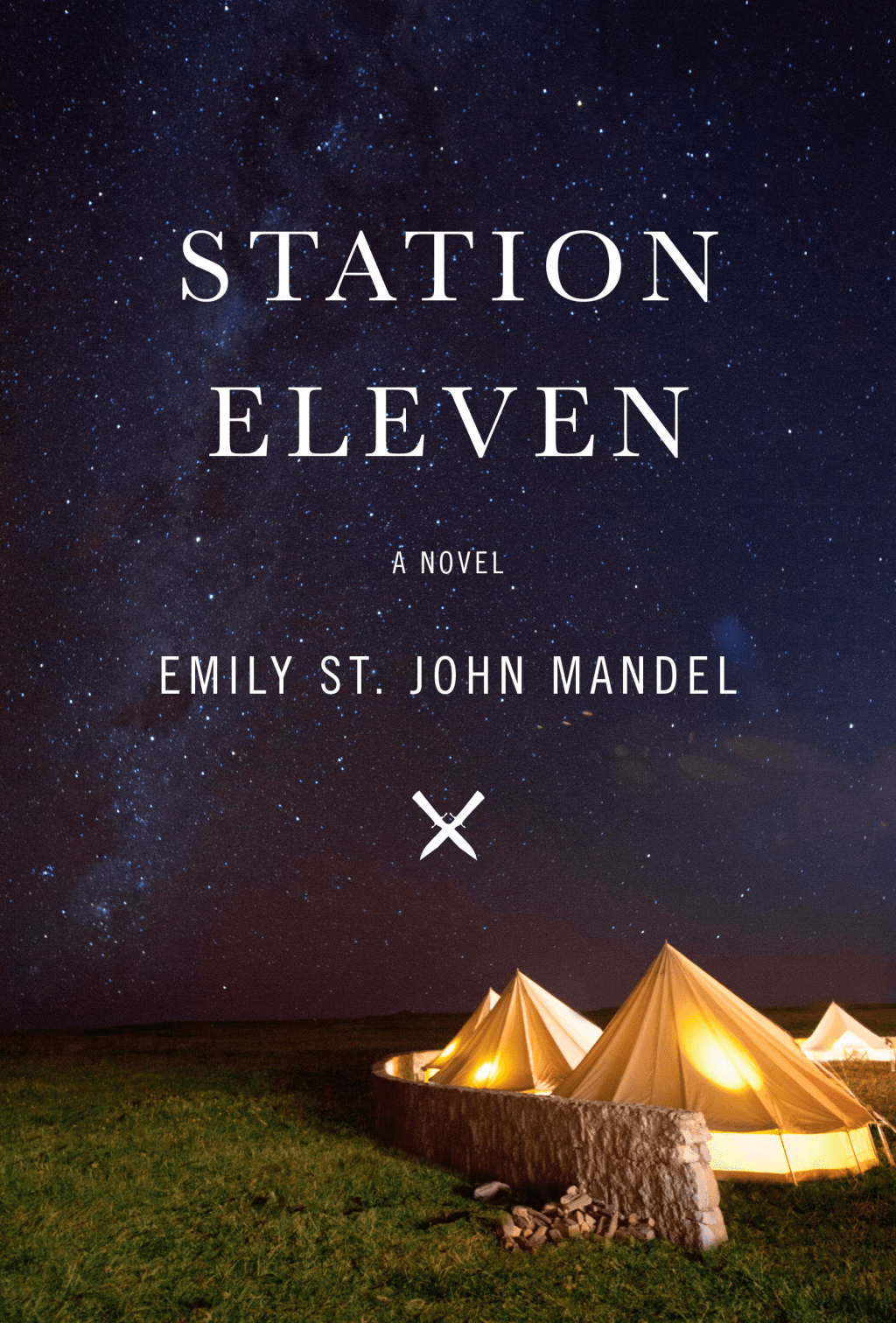
I’ve always had a thing for dystopian stories. Not because I enjoy doom and gloom, but because they often hold up a mirror to our world. They make me think about the systems we rely on and how fragile they can be. Station Eleven by Emily St. John Mandel is one of those books that lingers.
It’s not your typical post-apocalyptic tale. There are no zombies, no epic battles. Instead, it follows a traveling Shakespeare troupe, the Traveling Symphony, as they perform for scattered communities two decades after a flu pandemic wipes out most of humanity. The narrative weaves between the pre-collapse world and the one that follows, connecting characters through art, memory, and a graphic novel called Station Eleven.
The Illusion of Stability
Reading Station Eleven made me reflect on how much we depend on technology and the systems that keep our world running. We assume electricity, communication networks, and global trade will always be there. But recent events are a reminder that this is far from guaranteed.
Take the massive power outage that hit Spain and Portugal a few weeks ago. In a matter of seconds, the entire Iberian Peninsula lost 30 gigawatts of power. Trains stopped. Hospitals switched to emergency power.
Communication went down. And it took nearly 24 hours to restore the grid. Just weeks later, a major phone outage took down internet and emergency services in Spain again. These were not isolated glitches, they revealed just how interconnected and vulnerable our infrastructure really is.And then there’s the growing threat of cyberattacks. From hospitals to pipelines to public services, attackers are probing the edges of our critical systems, and sometimes breaking through. A single breach can shut down energy supply, financial markets, or public safety services. In Station Eleven, a virus brings down the world. But in our reality, it might be digital.
What If the Collapse Isn’t a Virus?
The collapse in Station Eleven is fast. Within weeks of the flu outbreak, everything falls apart. But what if the next collapse is slower and more complex? What if it’s a combination of cyberattacks, failing infrastructure, political unrest, and disrupted global trade? What happens if a country can’t import the resources it needs, or if a regime change disrupts supply chains?
We like to think that civilized nations are stable, but that’s a comforting illusion. The systems we depend on, electricity, logistics, digital communication, are all connected. When one falters, the others feel it. Station Eleven shows us a world after the fall, but it also makes you wonder what we would cling to if our current world began to break. And what this book shows. It goes fast!! In only 20-30 years we are back to prehistoric basics. No lights, no food to get instantly, no safety. It’s quite scary.
Station Eleven isn’t just a story about the end of the world. It’s about what’s worth preserving when everything else is gone. It’s about art, connection, and the human drive to make meaning out of chaos. And it made me think. If survival is insufficient, like the book says, what should we be doing now to build resilience into the systems we take for granted?
If you’ve read the book, or have thoughts about how fragile our world has become, I’d love to hear from you. Let’s start a conversation.


 The Road to ALM