



In 2007 I read a book that never really left me. It was called Maximum Impact, written by Jack Henderson. I barely remember the plot. Something with action and conspiracy, probably. But that’s not what stayed with me. What stuck was the beginning of the book. A scene that felt like science fiction at the time, and yet weirdly possible.
The main character, John, is sitting in his house. He’s talking out loud, just in plain English, to his computer. And the computer is responding. It’s researching, analyzing, surfacing relevant information on multiple screens, seemingly knowing what he needs before he finishes asking for it. There’s no clicking, no typing. Just conversation and results. Natural. Fast. Autonomous.
At the time, it blew my mind. How could a system like that work? The book never explained the technology in much detail. It didn’t need to. The image of that computer—quietly powerful, always ready—lodged itself into my imagination. It became a reference point. Something that lingered in the background for years. Waiting.
And then ChatGPT came along.
Suddenly, I was talking to my computer. In English. In Dutch. In different tones, voices, and styles. I was asking questions, getting answers, having conversations that felt… well, almost like the opening scene of that book.
Now, with agentic AI and multi-agent systems becoming real, that 2007 vision is starting to take shape. Tasks are no longer just prompted, they’re delegated. Systems that collaborate, adapt, and anticipate. It’s not fiction anymore. It’s beginning.
The Rise of Agentic AI
That scene from Maximum Impact stayed with me. Not because of the story, but because of what it hinted at: technology that disappears into the background. A computer that doesn’t need detailed instructions or strict interfaces. Just intent. Just language.
Now, with agentic AI and multi-agent coordination protocols like MCP, that vision is moving from imagination into engineering reality.
We’ve long been building systems that expose functionality through APIs. But even in a fully documented API landscape, we spend hours negotiating contracts. What object do we pass? What does the JSON look like? What are the return values, the error codes, the security expectations?
This middleware layer is the layer where we spent most of our time today. Integrating different systems with each other. And this is still very rigid, very structured and therefor very fragile.
Agentic AI pushes us into a different paradigm. A place where reuse becomes fluent. Where systems don’t just expose functions, they expose capabilities that can be discovered, reasoned about, and orchestrated dynamically. AI can figure out what system to use, how to use it, and even how to translate between one system’s output and another’s input. No hardcoded glue. Just logic and language.
Of course, we’ll still need security. Authorization. Boundaries. But the overhead of wiring things together may drastically shrink.
And think about what that unlocks. Every tool, every SaaS, every platform becomes a building block. If you can talk to it, reason with it, and connect it to others. How much custom implementation do we still need?
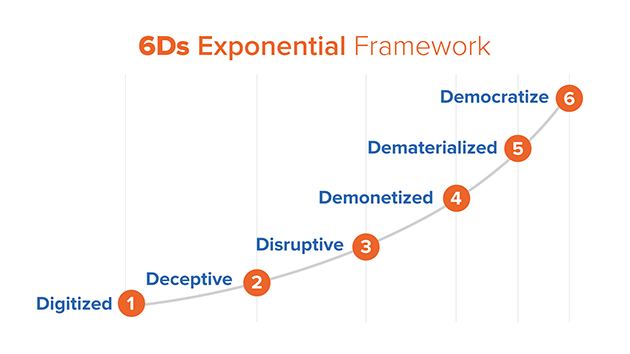
This is real democratization of IT. Like the 6Ds of of exponential organizations describe: digitization, deception, disruption, demonetization, dematerialization, and democratization. Agentic AI hits every one of those. Anyone who can describe a problem in clear language can potentially create a workflow, a solution, a product.
And who owns that? Especially when the “middleware” that connects these systems is also generated by AI. Tools like GitHub Spark, Microsoft Copilot Studio and Google Jules already give a good insight in that as well.
I think that we are on the verge of something completely new. Not just a technical shift, but a completely new type if software industry.
Agentic AI is going to change a lot. If not everything. And as all of this unfolds, that one scene from a 2007 thriller keeps lingering in the back of my mind.



 The Road to ALM